
TL;DR
This was the measuring cup I never knew I needed. Dope.
Quick Intro
A while ago, I visited my brother’s house. While there, I got very comfortable with his kitchen; made myself right at home. I came across one of his measuring cups and damn near lost my mind in excitement. If you bake or do anything that involves measuring cups from time to time, I’m sure you’ll feel where I’m coming from.
GIF of woman shaking her head saying, “it’s not weird at all.” (credit: giphy.com)
My Goal
I had no goal 😂. I was literally just being nosey and came across something I liked.
My Experience
In my brother’s kitchen was this measuring cup:
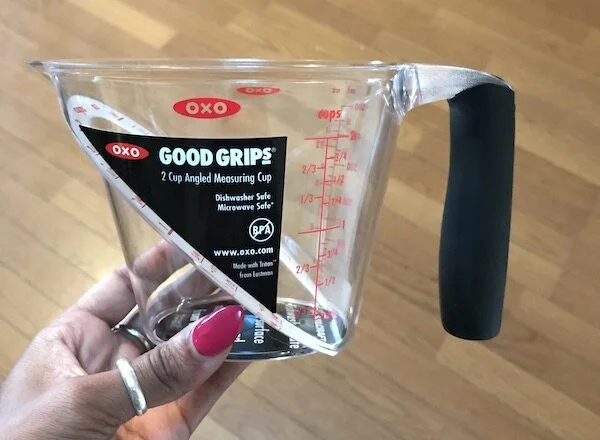
Picture of my brother’s clear, plastic measuring cup (from the side).
Basic, right? Now take a look at it from this angle:
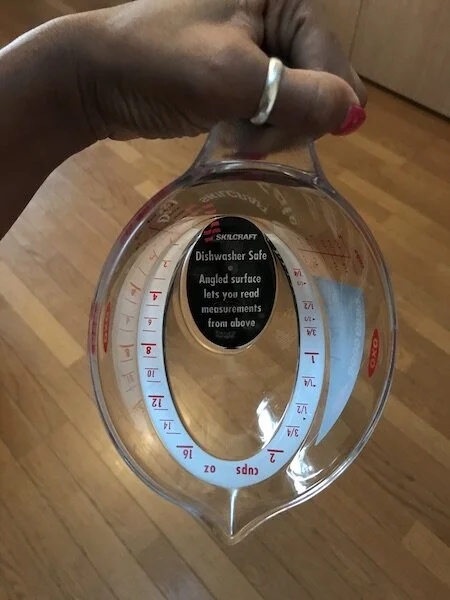
Picture of my brother’s clear, plastic measuring cup (from the top) with a label that reads, “angled surface lets you read measurements from above.”
*Cue heavenly music* 😍If you don’t use these on a regular basis, then this might not be a big deal to you but oh my goodness...it was a huge deal to me. I filled it up with water just to see it in action.
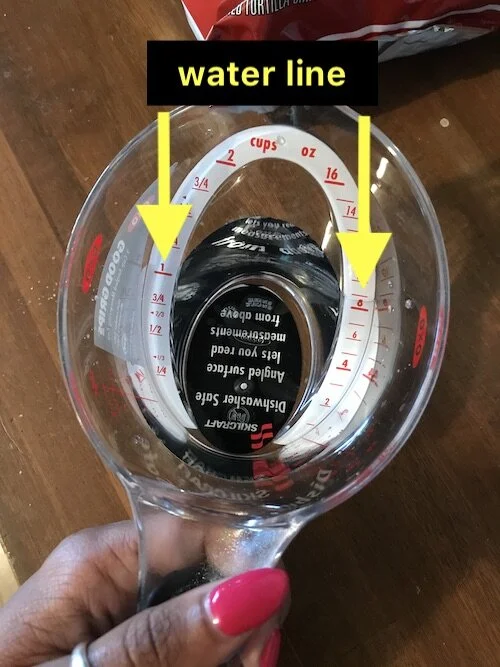
Picture of my brother’s clear, plastic measuring cup (from the top) showing the water measurement.
Dope or Dead?
Dope. Typically, when I use a clear measuring cup, the measurements are printed on the sides of the container. It’s necessary for me to either bring the cup up to my eye level or bend down while the cup is on a flat surface (i.e., the counter top) to make sure that the substance being measured is at the correct measurement. Putting the cup down on a flat surface is the most accurate way to measure because you’re ensuring that the substance you’re measuring is as level as it can be.
However, with this measuring cup, I am given the choice of viewing the measurement from the side (per usual) or from the top (totally new for me!). This option of measuring from the top saves me the hassle of bending over to view the measurement at eye level from the side. This is great for me because it reduces the amount of effort I need to exude while using this kitchen accessory but imagine if I actually had mobility issues or some other condition that made it difficult for me to bend over! This was a delightful additional feature to me, while for someone else, it could be a necessary one.

GIF of man pointing to his temple, indicating that he’s telling someone to think about something. (credit: giphy.com)
UX Corner
The Kano Model is a product development theory used by teams to determine or understand customer satisfaction when it comes to the features in our products. There are five main categories of features in this model, including delighters.
The additional method of measurement from the top that the measuring cup discussed in this article has is an example of a delighter feature (for me). Delighters are features that are not required to be included in the product in order for it to perform well; however, when they’re present, they add an extra sense of pleasure that users typically do not expect. A little “razzle-dazzle,” if you will.

GIF of Homer Simpson saying, “What you need’s a little razzle-dazzle.” (credit: giphy.com)
These are great additions to products and can help get our users extra excited, possibly resulting in more word-of-mouth recommendations. It is important to note, though, that if a product doesn’t meet the basic needs of our users, then our delighters will be useless.
If the measuring cup had that additional method of measurement but was not able to capture and hold liquids, it would not be useful to me at all. So, ensuring that all of our bases are covered and basic expectations are met is a must before we think about creating anything extra.
Check out this article to dive deeper into delight and design.