TL;DR
Very useful. I’d love to know who recommended this be created. Dope.
Quick Intro
While in Japan, I went to a shopping mall with my family. One of the stores was selling small rugs.
My Goal
I had no goal...once again, lol. Just another observation of something cool that I’d never seen before that I could definitely see myself using.
My Experience
I walked by the rug aisle and noticed this decal on the ground:
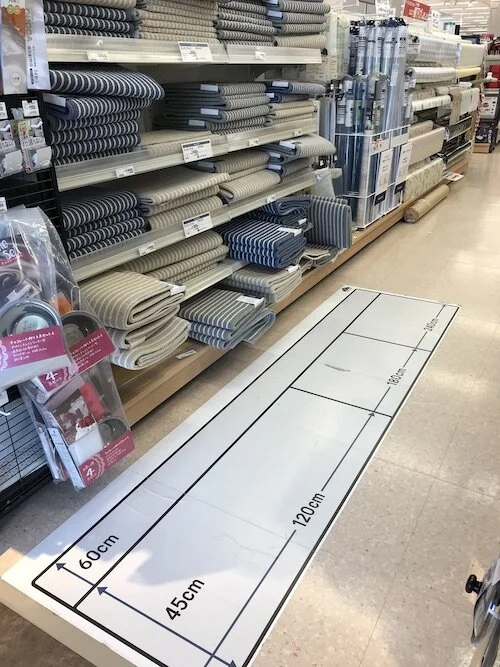
Image of measuring chart decal on the store floor in the rug aisle.
How convenient. I instantly thought of two scenarios in which I could realistically see myself that would make this thing clutch: 1) I need a certain size rug for a space that I forgot to measure but can roughly figure out by eye, or 2) I need a reference to easily find the right rug to take from the several options available on the shelf without having to unfold any of them (and best believe I would have to unfold a rug to know the difference between the sizes).
I was so pleasantly surprised, I had to snap a pic. 🙂
Dope or Dead?
Very dope. For my fellow “not good at knowing the measurements of things” folks, I think it goes without saying that this is a godsend. Does this exist anywhere else? I don’t think I’ve seen it in a Walmart or a Target (where I’ve bought plenty a rug).
This would be nice to have. It’s one thing to see measurements on a chart on a wall or screen but right on the floor—where the rug will end up going—is most helpful since I’ll be looking at it from that angle for 99.9% of the time.

GIF of dog rubbing its body all over a rug. (credit: pinterest.cl)
UX Corner
In UX research, there is a ton of value in seeing things how they would be in their natural habitat. The floor decal described in this anecdote was valuable to me because in addition to it being able to help me understand the different measurements, it was actually on the floor. This is much more useful to me than a wall chart or a chart I could find online because it was in the position where I would ultimately put the rug. The next best thing would be to actually see the measurements (or the rug) where I plan to place it—that is, in my house. You can imagine why AR (augmented reality) is so popular. More and more apps, like the Amazon app, let users use AR to see what different pieces of furniture might look like in their actual home.
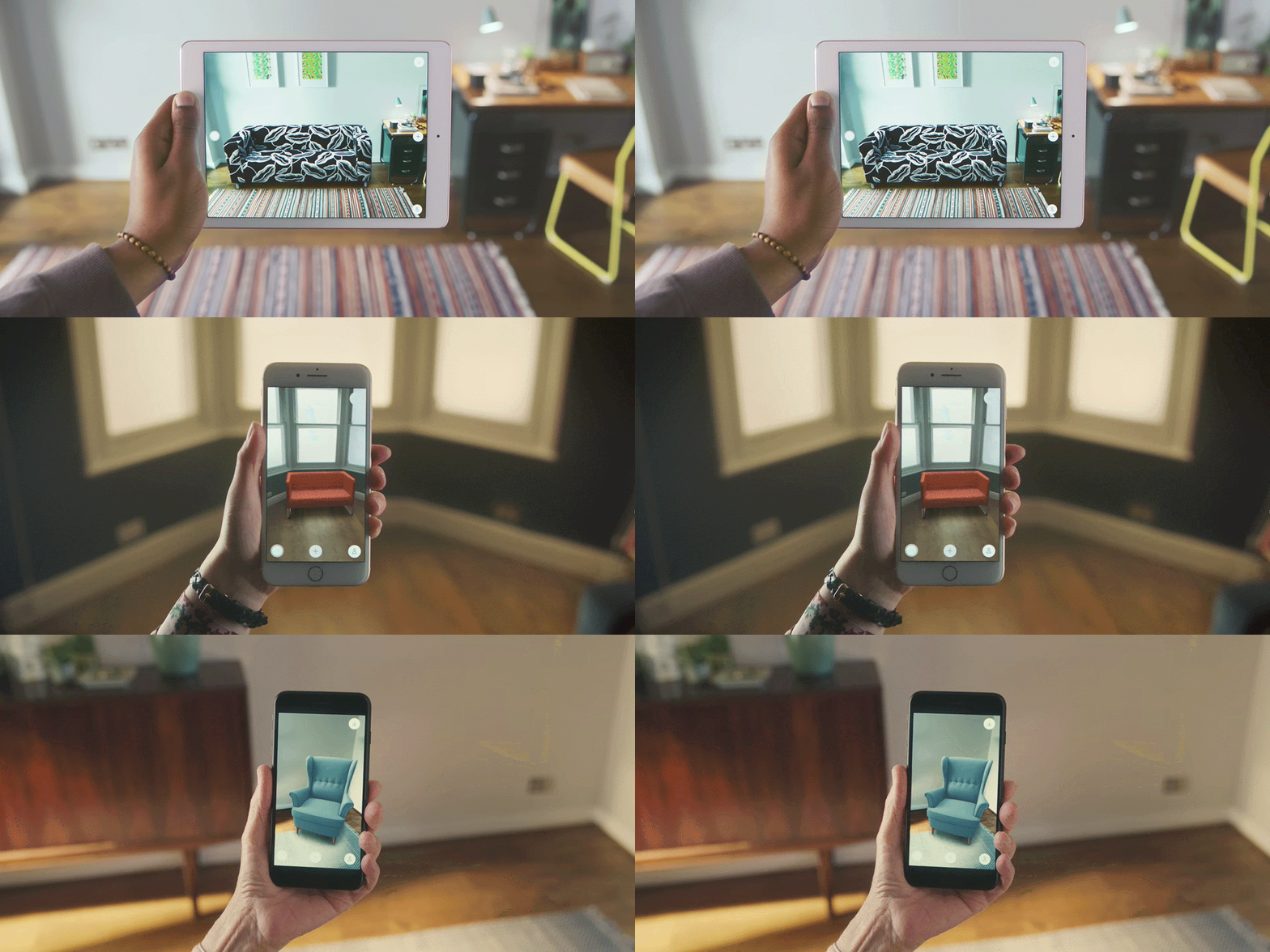
GIF of augmented reality app virtually fitting different kinds of furniture. (credit: learning.g2.com)
Field studies are UX research methods that take advantage of understanding people while they do things that they normally do and/or go to places they typically go. They are very high on my list in terms of effectiveness because they can reveal insights that might otherwise go unnoticed. Field studies like contextual inquiries meet participants where they’re at to get a better sense of their experience as a whole with the product/service in question and the environment in which they utilize it.
Think about fitting rooms and why they exist. We’re able to learn the size of a garment and match that to the approximate size of our own bodies; however, it’s not always a perfect match. There are plenty of pieces of clothing that I, personally, feel more comfortable trying on before buying because I know that what the tag says and what reality says may be completely different…like jeans! They may not be what I actually need. Most times, I need to try them on to see if I can squat and bend over comfortably (because I’m sure I’ll have to do that at some point while wearing them—context!). If they don’t pass that test (even if they fit), they’re not for me!